Buy mobilephonesshop.com ?
We are moving the project
mobilephonesshop.com .
Are you interested in purchasing the domain
mobilephonesshop.com ?
domain@kv-gmbh.de · 0541-91531010
Buy mobilephonesshop.com ?
How to create a titration curve of a conductivity titration?
To create a titration curve of a conductivity titration, you would first need to set up your titration apparatus with a conductivity meter. Begin by measuring the initial conductivity of the solution being titrated. As you add titrant incrementally, record the conductivity at each point. Plot the conductivity values against the volume of titrant added to create a titration curve. The curve will typically show a sharp increase in conductivity at the equivalence point, allowing you to determine the endpoint of the titration. **
How does a titration with the degree of titration work?
A titration with the degree of titration works by gradually adding a titrant of known concentration to a solution of the analyte until the reaction between the two is complete. The point at which the reaction is complete is determined by using an indicator or a pH meter. The amount of titrant required to reach this point is used to calculate the concentration of the analyte in the original solution. The degree of titration refers to the extent to which the reaction has progressed and is typically expressed as a percentage. **

Similar search terms for Titration
Top-Angebote
Products related to Titration:
-
Inspire Select 12 Pcs Decorative Furniture Corner Protectors Carved Triangle Brackets For Boxes, Cabinets & Storage Cases 12 PcsProtect your furniture while adding a touch of classic charm with a simple upgrade that makes a big visual difference. These decorative furniture corner protectors are designed to reinforce and protect the edges of boxes, cabinets, and storage cases...45,94 $*Shipping: 0,00 $Secure redirect to the provider
-
Ultra PRO Small Deck Protectors - White - 60ct - Card Game AccessoriesProtect your trading cards with these Ultra PRO Small Deck Protectors. Each pack contains 60 white sleeves made from acid-free, non-PVC polypropylene, helping to safeguard cards from scratches and everyday handling wear. The clear front lets the artwork and card details remain visible, while the textured matte back helps prevent sleeves from sticking together during use. The finish is designed to provide a smooth shuffling feel for card games and collection storage. These small-size sleeves fit Yu-Gi-Oh! and Cardfight!! Vanguard trading cards.4,09 £*Shipping: 3,95 £Secure redirect to the provider
-
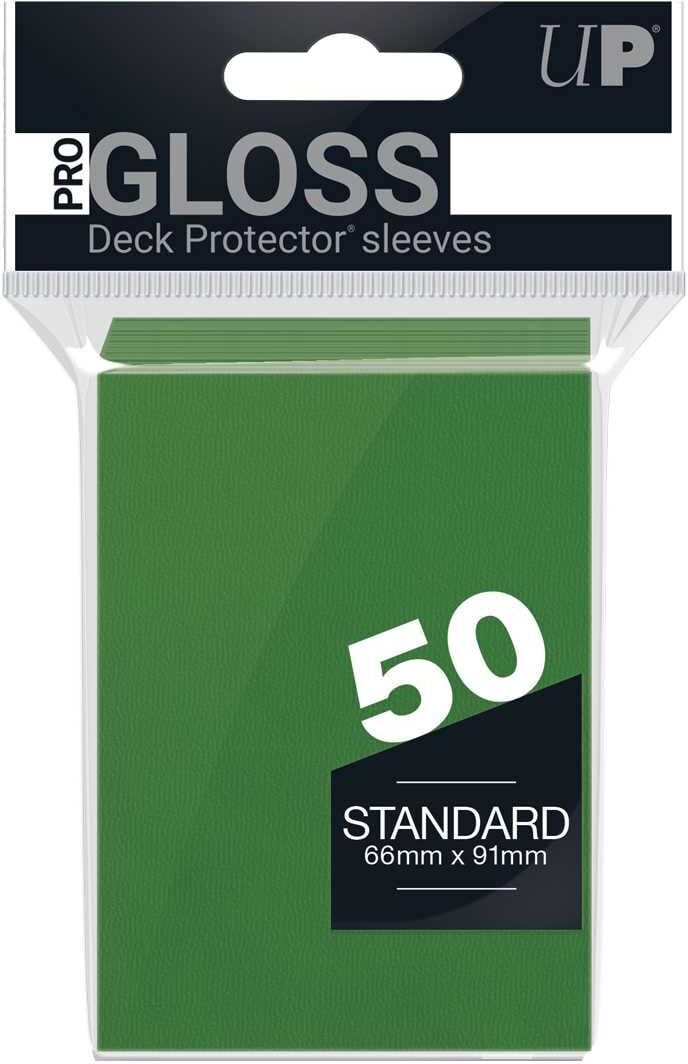
Ultra PRO Standard Deck Protectors 50ct - Green - Trading Cards AccessoriesProtect your trading cards with these Ultra PRO Deck Protectors. This pack of 50 green sleeves is made from acid-free, non-PVC polypropylene to shield cards from scratches, handling marks, and everyday wear. The clear front provides a high-clarity view of the card artwork, while the textured matte back helps reduce sticking between sleeves and supports smooth shuffling during play. These sleeves are designed for standard trading cards, including popular games like Pokémon and Magic: The Gathering.3,09 £*Shipping: 3,95 £Secure redirect to the provider
-
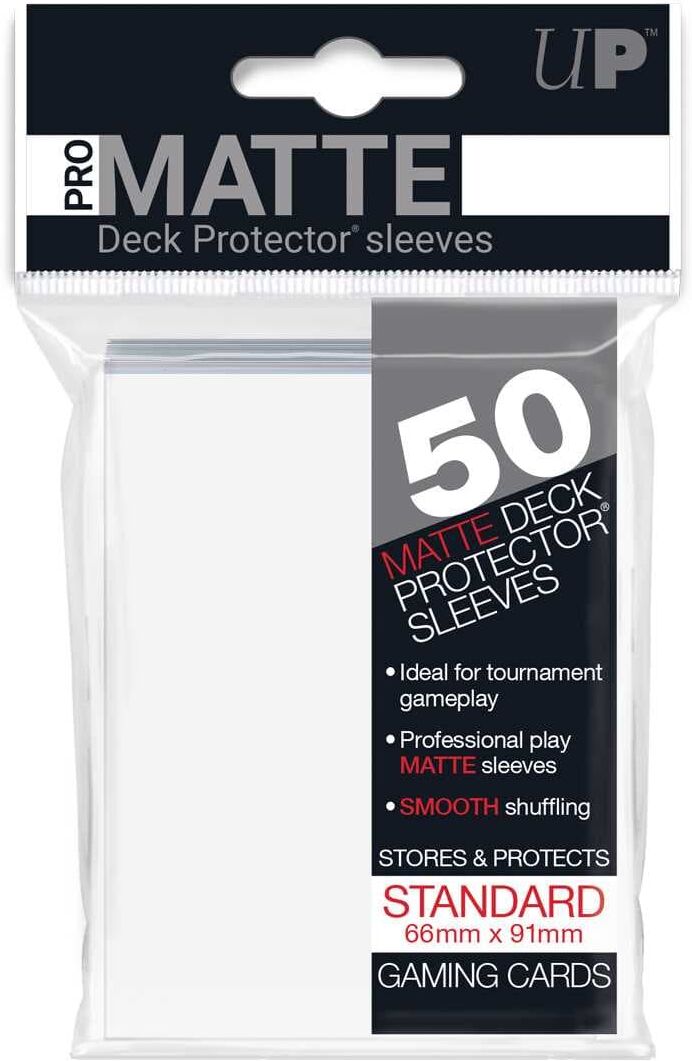
Ultra PRO Matte Standard Deck Protectors 50ct White - Card Game AccessoriesProtect your trading cards during play and storage with Ultra PRO Matte Standard Deck Protectors. Each pack contains 50 acid-free, non-PVC polypropylene sleeves in white, designed to shield cards from scratches and everyday wear. The matte finish reduces glare during gameplay, while the textured matte back provides a secure feel and prevents sleeves from sticking together. The smooth shuffle surface is suitable for regular tabletop card play. These sleeves are compatible with standard-size trading cards, including Pokémon and Magic: The Gathering cards. Please check the dimensions of your cards before use to ensure compatibility.3,32 £*Shipping: 3,95 £Secure redirect to the provider


-
How does titration work?
Titration is a technique used in chemistry to determine the concentration of a specific substance in a solution. It involves slowly adding a solution of known concentration (titrant) to a solution of unknown concentration until the reaction between the two is complete. This is typically indicated by a color change or other observable change. By measuring the volume of titrant required to reach the endpoint, the concentration of the unknown solution can be calculated using stoichiometry. **
-
What is a titration?
A titration is a laboratory technique used to determine the concentration of a specific substance in a solution. It involves slowly adding a solution of known concentration (titrant) to a solution of unknown concentration until the reaction between the two is complete. The point at which the reaction is complete is called the equivalence point, which is used to calculate the concentration of the unknown solution. Titration is commonly used in chemistry for various purposes, such as determining the acidity or alkalinity of a solution. **
-
Can the titration volume be calculated without having performed the titration beforehand?
No, the titration volume cannot be accurately calculated without having performed the titration beforehand. The titration volume is determined by the amount of titrant needed to reach the equivalence point, which can only be determined through the actual titration process. The titration volume is a crucial parameter in determining the concentration of the analyte in the sample, so it is essential to perform the titration to obtain this information accurately. **
-
What does a titration curve look like when no titration is performed?
When no titration is performed, a titration curve would simply be a straight horizontal line at the initial pH of the solution being tested. This is because there would be no addition of titrant to cause any changes in pH. The curve would remain flat and unchanging until a titrant is added to initiate the titration process. **

What is the difference between a pH-metric titration and an indicator titration?
A pH-metric titration involves the use of a pH meter to measure the pH of a solution as a titrant is added to it. This allows for a precise determination of the equivalence point of the titration. On the other hand, an indicator titration uses a chemical indicator that changes color at or near the equivalence point to signal the end of the titration. While pH-metric titrations provide more accurate and precise results, indicator titrations are simpler and more commonly used in introductory chemistry labs. **
What is a back titration?
A back titration is a technique used in analytical chemistry to determine the concentration of an analyte that reacts slowly or incompletely with a direct titration method. It involves adding an excess of a known reagent to the analyte, allowing the reaction to proceed, and then titrating the excess reagent that did not react with a second titrant. By measuring the amount of the second titrant required to react with the excess reagent, the concentration of the analyte can be calculated. Back titrations are particularly useful when the analyte is volatile, weakly acidic or basic, or when there are interfering substances present. **
Top-Angebote
Products related to Titration:
-
Multicon Wholesale Hub Mobile Phone Screen Repair Tool Kit Professional Screwdriver Set For IPhone & Smartphones Mobile Phone Screen Repair Tool Kit Professional Screwdriver Set For IPhone & SmartphonesTransform your phone repair experience with this versatile 20 in 1 mobile phone screen opening repair tool kit. Whether youre fixing a cracked screen or tackling other repairs, this highquality set is designed for efficiency and precision. Its...63,97 $*Shipping: 0,00 $Secure redirect to the provider
-
Inspire Select 12 Pcs Decorative Furniture Corner Protectors Carved Triangle Brackets For Boxes, Cabinets & Storage Cases 12 PcsProtect your furniture while adding a touch of classic charm with a simple upgrade that makes a big visual difference. These decorative furniture corner protectors are designed to reinforce and protect the edges of boxes, cabinets, and storage cases...45,94 $*Shipping: 0,00 $Secure redirect to the provider
-
Ultra PRO Small Deck Protectors - White - 60ct - Card Game AccessoriesProtect your trading cards with these Ultra PRO Small Deck Protectors. Each pack contains 60 white sleeves made from acid-free, non-PVC polypropylene, helping to safeguard cards from scratches and everyday handling wear. The clear front lets the artwork and card details remain visible, while the textured matte back helps prevent sleeves from sticking together during use. The finish is designed to provide a smooth shuffling feel for card games and collection storage. These small-size sleeves fit Yu-Gi-Oh! and Cardfight!! Vanguard trading cards.4,09 £*Shipping: 3,95 £Secure redirect to the provider
-
How to create a titration curve of a conductivity titration?
To create a titration curve of a conductivity titration, you would first need to set up your titration apparatus with a conductivity meter. Begin by measuring the initial conductivity of the solution being titrated. As you add titrant incrementally, record the conductivity at each point. Plot the conductivity values against the volume of titrant added to create a titration curve. The curve will typically show a sharp increase in conductivity at the equivalence point, allowing you to determine the endpoint of the titration. **
-
How does a titration with the degree of titration work?
A titration with the degree of titration works by gradually adding a titrant of known concentration to a solution of the analyte until the reaction between the two is complete. The point at which the reaction is complete is determined by using an indicator or a pH meter. The amount of titrant required to reach this point is used to calculate the concentration of the analyte in the original solution. The degree of titration refers to the extent to which the reaction has progressed and is typically expressed as a percentage. **
-
How does titration work?
Titration is a technique used in chemistry to determine the concentration of a specific substance in a solution. It involves slowly adding a solution of known concentration (titrant) to a solution of unknown concentration until the reaction between the two is complete. This is typically indicated by a color change or other observable change. By measuring the volume of titrant required to reach the endpoint, the concentration of the unknown solution can be calculated using stoichiometry. **
-
What is a titration?
A titration is a laboratory technique used to determine the concentration of a specific substance in a solution. It involves slowly adding a solution of known concentration (titrant) to a solution of unknown concentration until the reaction between the two is complete. The point at which the reaction is complete is called the equivalence point, which is used to calculate the concentration of the unknown solution. Titration is commonly used in chemistry for various purposes, such as determining the acidity or alkalinity of a solution. **
Similar search terms for Titration
-
Ultra PRO Standard Deck Protectors 50ct - Green - Trading Cards AccessoriesProtect your trading cards with these Ultra PRO Deck Protectors. This pack of 50 green sleeves is made from acid-free, non-PVC polypropylene to shield cards from scratches, handling marks, and everyday wear. The clear front provides a high-clarity view of the card artwork, while the textured matte back helps reduce sticking between sleeves and supports smooth shuffling during play. These sleeves are designed for standard trading cards, including popular games like Pokémon and Magic: The Gathering.3,09 £*Shipping: 3,95 £Secure redirect to the provider
-
Ultra PRO Matte Standard Deck Protectors 50ct White - Card Game AccessoriesProtect your trading cards during play and storage with Ultra PRO Matte Standard Deck Protectors. Each pack contains 50 acid-free, non-PVC polypropylene sleeves in white, designed to shield cards from scratches and everyday wear. The matte finish reduces glare during gameplay, while the textured matte back provides a secure feel and prevents sleeves from sticking together. The smooth shuffle surface is suitable for regular tabletop card play. These sleeves are compatible with standard-size trading cards, including Pokémon and Magic: The Gathering cards. Please check the dimensions of your cards before use to ensure compatibility.3,32 £*Shipping: 3,95 £Secure redirect to the provider
-
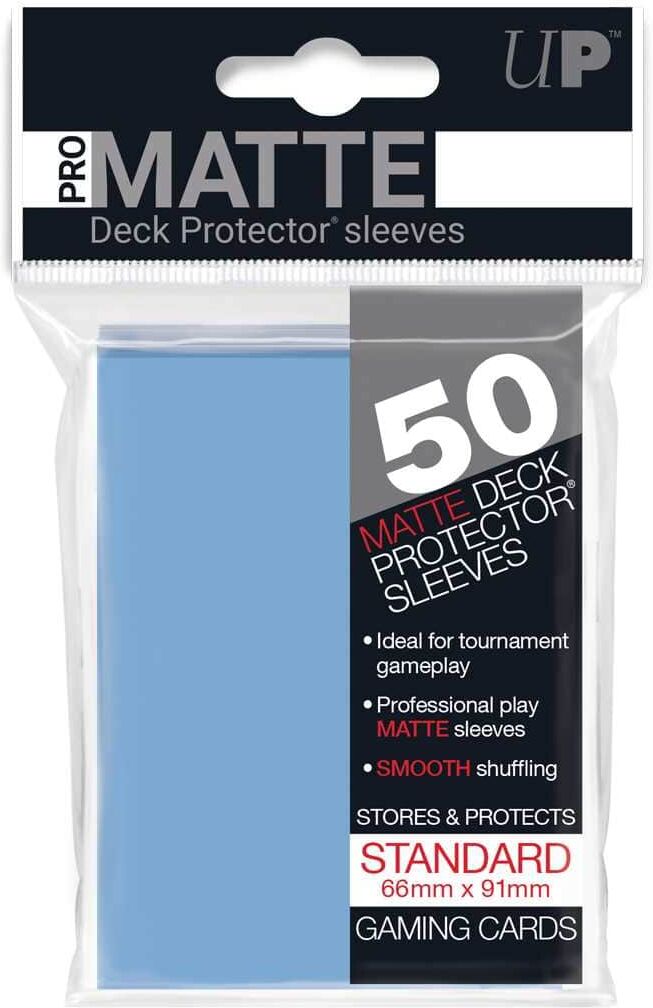
Ultra PRO Matte Deck Protectors - Light Blue - 50ct - Card Game AccessoriesProtect your standard-sized trading cards with these Ultra PRO Matte Deck Protectors. Each pack contains 50 light blue sleeves made from acid-free, non-PVC polypropylene, helping to shield cards from scratches and everyday wear. The matte finish reduces glare under bright lighting, while the textured matte back prevents sleeves from sticking together during play. This finish also supports smooth, consistent shuffling for card games and trading card activities. The sleeves are a practical choice for players who want a uniform look and added protection for a standard trading card deck.3,32 £*Shipping: 3,95 £Secure redirect to the provider
-
Ultra PRO Matte Small Deck Protectors - Blue 60 ct - Trading Card AccessoriesProtect small-format trading cards with 60 Ultra PRO Matte Deck Protectors. Acid-free, non-PVC polypropylene prevents scratches and wear. Matte finish reduces glare under bright lighting. Textured back prevents sleeves from sticking together for smooth shuffling. Designed for small-size cards used in Yu-Gi-Oh! and Cardfight!! Vanguard games.3,69 £*Shipping: 3,95 £Secure redirect to the provider
-
Can the titration volume be calculated without having performed the titration beforehand?
No, the titration volume cannot be accurately calculated without having performed the titration beforehand. The titration volume is determined by the amount of titrant needed to reach the equivalence point, which can only be determined through the actual titration process. The titration volume is a crucial parameter in determining the concentration of the analyte in the sample, so it is essential to perform the titration to obtain this information accurately. **
-
What does a titration curve look like when no titration is performed?
When no titration is performed, a titration curve would simply be a straight horizontal line at the initial pH of the solution being tested. This is because there would be no addition of titrant to cause any changes in pH. The curve would remain flat and unchanging until a titrant is added to initiate the titration process. **
-
What is the difference between a pH-metric titration and an indicator titration?
A pH-metric titration involves the use of a pH meter to measure the pH of a solution as a titrant is added to it. This allows for a precise determination of the equivalence point of the titration. On the other hand, an indicator titration uses a chemical indicator that changes color at or near the equivalence point to signal the end of the titration. While pH-metric titrations provide more accurate and precise results, indicator titrations are simpler and more commonly used in introductory chemistry labs. **
-
What is a back titration?
A back titration is a technique used in analytical chemistry to determine the concentration of an analyte that reacts slowly or incompletely with a direct titration method. It involves adding an excess of a known reagent to the analyte, allowing the reaction to proceed, and then titrating the excess reagent that did not react with a second titrant. By measuring the amount of the second titrant required to react with the excess reagent, the concentration of the analyte can be calculated. Back titrations are particularly useful when the analyte is volatile, weakly acidic or basic, or when there are interfering substances present. **
* All prices are inclusive of VAT and, if applicable, plus shipping costs. The offer information is based on the details provided by the respective shop and is updated through automated processes. Real-time updates do not occur, so deviations can occur in individual cases. ** Note: Parts of this content were created by AI.